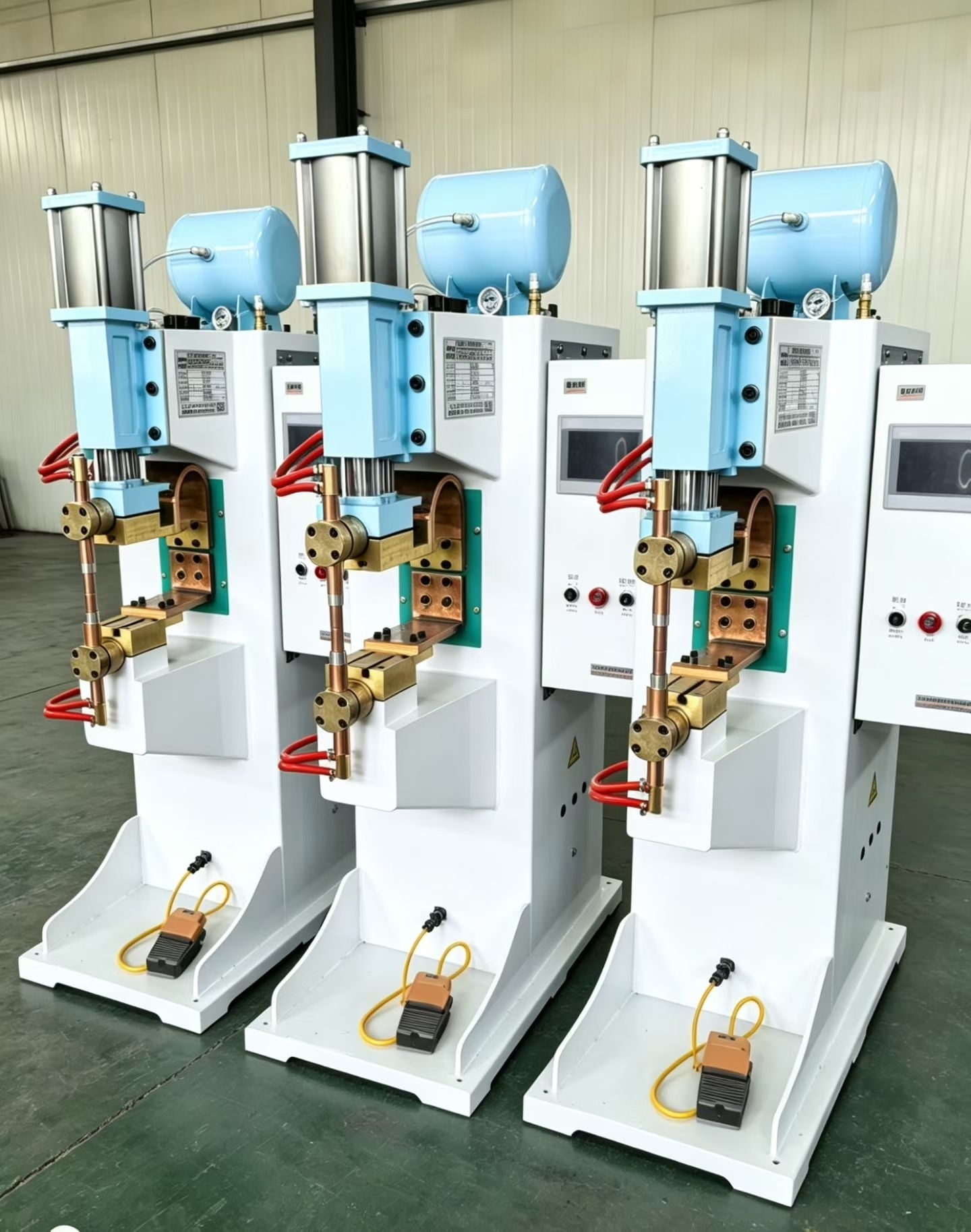

Essential details
G.W:400 kg
Size:L(105)*W(65)*H(150) cm
N.W:350 kg
Shipping:Land transport, Sea transport
Specification Number:Input Voltage: 2-phase 380V ±10%, 50Hz ±1%; Output Welding Short-circuit Current: 22000A
Product Code:J-63K
Package Description:Packed with wooden case and waterproof film
Product Introduction
1. Product Overview
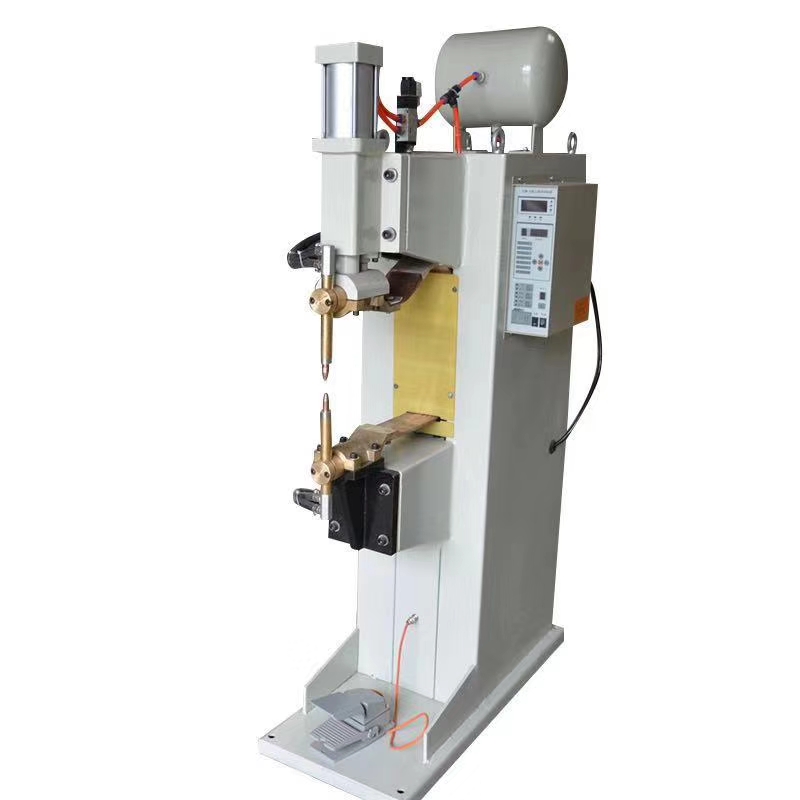
- This electronic pulse resistance spot and projection welder is a power frequency AC resistance welding equipment, specially designed for spot welding and projection welding of metal sheets. Equipped with an independent precision welding power supply, pneumatic pressure cylinder and integrated electric control system, it adopts a single-power single-welding-head discharge welding mode featuring stable operation, high welding precision and wide compatibility with various sheets.
- The machine is fitted with a digital touch control system for simple and convenient operation. It can store multiple sets of welding parameters, suitable for matching automated production lines as well as independent stand-alone welding workstations. The whole machine complies with EU CE safety standards with reliable safety performance, meeting the production demands of overseas industrial factories.
2. Applicable Welding Materials
It is applicable for spot welding and projection welding of various metal sheets, including:
- Stainless steel sheets
- Galvalume sheets and galvanized steel sheets
- Ordinary iron sheets and low carbon steel sheets
- High carbon steel sheets and special laminated metal sheets
3. Standard Operating Conditions & Environmental Requirements
- The equipment shall be operated under the following qualified environmental conditions.
| Item | Standard Operating Condition |
|---|---|
| Power Supply | 2-phase 380V±10%, 50Hz±1% |
| Ambient Gas | Environment free of acid, alkaline, corrosive, harmful, flammable and explosive gases |
| Ambient Temperature | -10℃ ~ +45℃ |
| Average Relative Humidity | Less than 90% |
| Compressed Air Pressure | 0.4~0.6Mpa |
| Foundation Requirement | Flat and stable foundation |
4. Working Principle
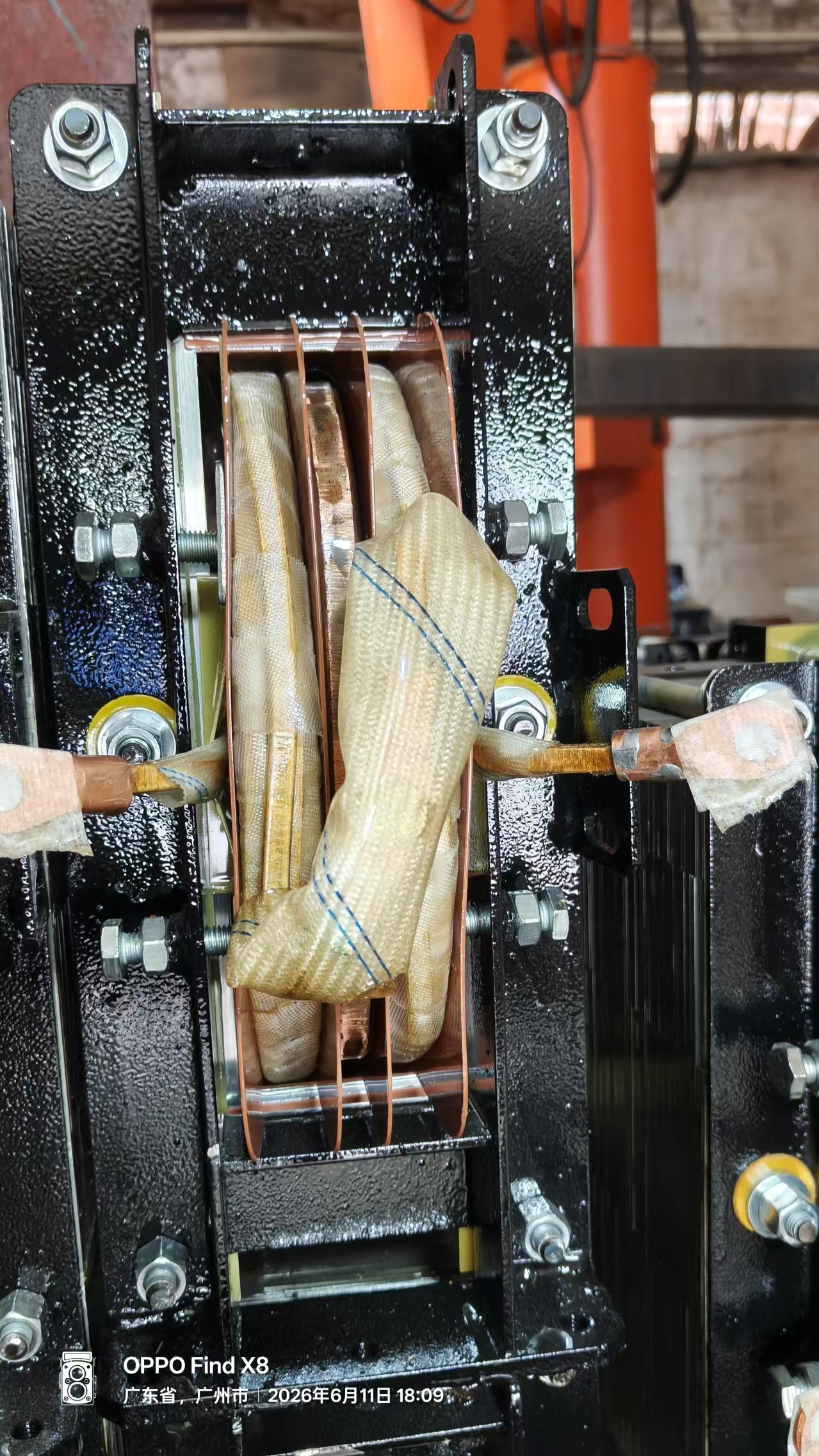
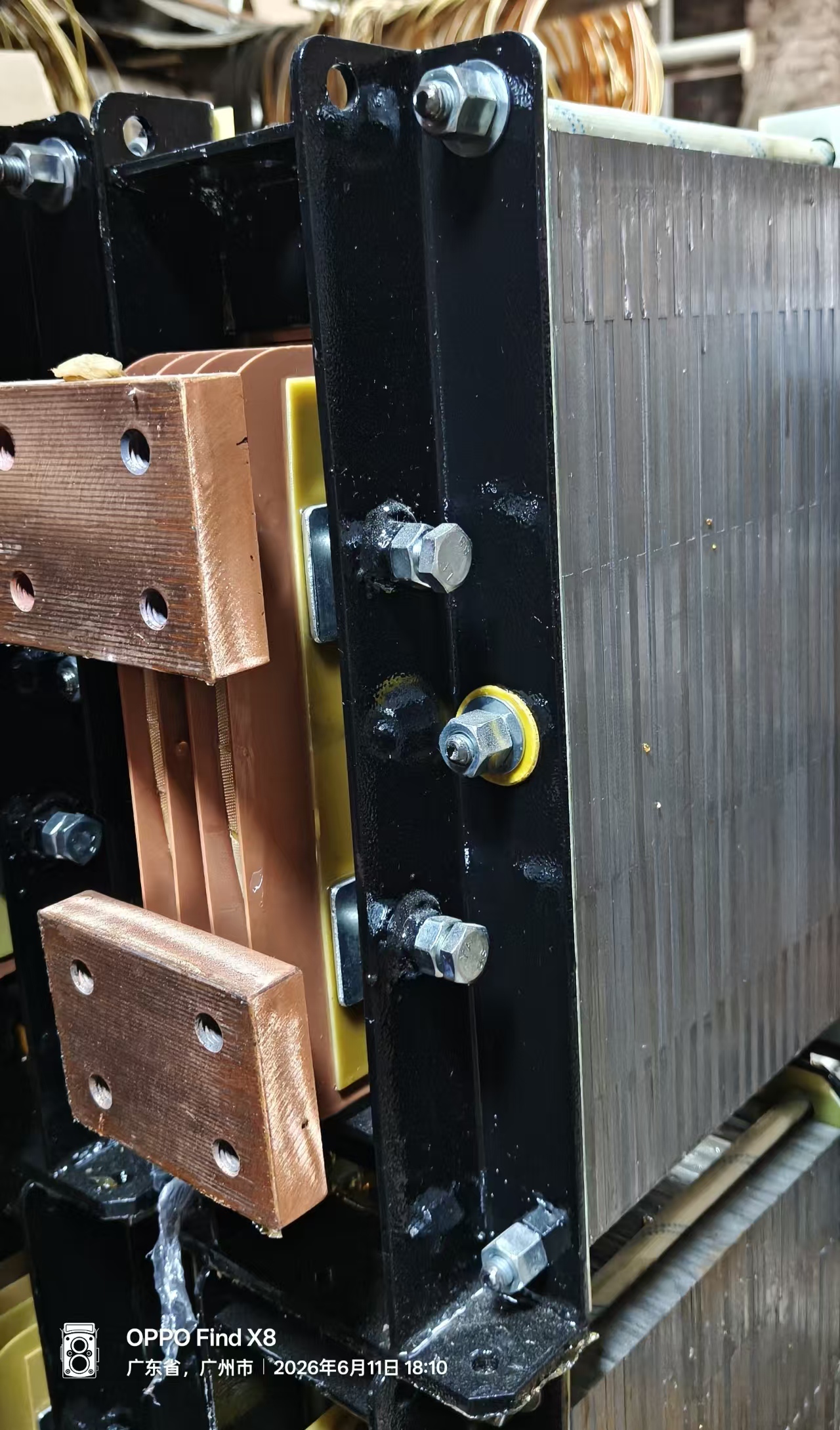
- The machine adopts the electronic pulse power frequency welding principle: the built-in power frequency welding transformer reduces input voltage and instantly boosts output current to form low-voltage high-current welding output. The heavy current is transmitted to the joint position of workpieces via special welding electrodes.
Concentrated resistance heat is generated by the contact resistance of metal workpieces, rapidly melting the metal at welding joints. With constant pressure applied by the pneumatic pressing device, two workpieces are tightly fused to form stable spot and projection welds. The machine supports two-stage discharge process to realize integrated preheating, shaping and tempering of workpieces.
5. Core Product Advantages
- Powerful Welding Output
Strong welding penetration enables easy welding of thick hard metal sheets such as low carbon steel and stainless steel, free of cold solder joints and burn-through during thick plate welding. - Two-Stage Separate Discharge Process
It is equipped with independent two-stage discharge programs for separate preheating, shaping and tempering of special metal sheets. It perfectly solves common defects such as cold welding, peeling and crack of welding spots caused by current shunting in multi-point projection welding. It delivers stable welding results with excellent adaptability for hard-to-weld materials including high carbon steel and composite laminated metal sheets. - High-Safety Protection Design
The whole machine adopts a 24VDC low-voltage control system for safe low-voltage operation. Designed strictly in accordance with EU CE safety standards, it features multi-protection electric circuits to greatly reduce safety accidents such as electric leakage and pneumatic faults, satisfying standardized safety production requirements of overseas factories. - Intelligent Digital Touch Control
It comes with a touch parameter adjustment panel with intuitive and easy operation, enabling quick commissioning without professional technicians. The machine can store 9 independent sets of welding parameters for one-click recall when switching different workpieces or sheet specifications, eliminating repeated commissioning and greatly improving production efficiency.
6. Standard Technical Specification Table
| MODEL | Power Capacity (KVA) | Input Power | Frequency (Hz) | Duty Cycle (%) | Max Welding Current (A) | Max Welding Capacity (mm) | Electrode Distance (mm) | Welding Stroke (mm) | Rated Welding Pressure | Overall Dimension (L*W*H mm) |
|---|---|---|---|---|---|---|---|---|---|---|
| J-63K | 63 | 2-phase 380V | 50/60 | 25 | 22000 | 3+3 | 180 | 100 | 500kg (6kg/c㎡) | 1050*650*1500 |
7. General Structure Description
- Machine Frame
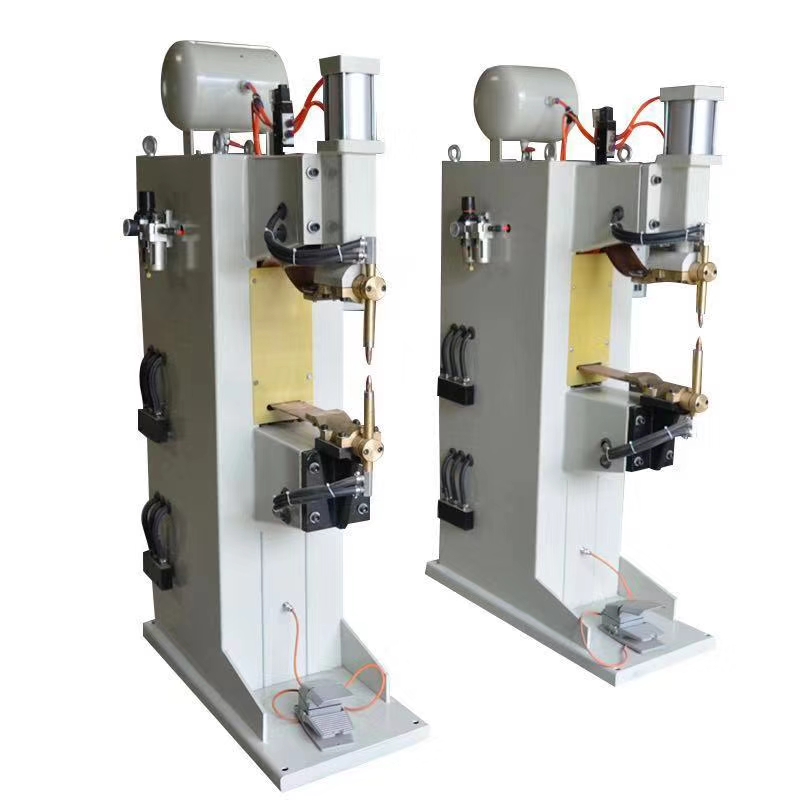
The machine adopts an integrated vertical C-type frame structure, integrally welded with high-quality thickened steel plates and national standard profiles. Post-welding annealing aging treatment is applied to completely eliminate internal welding stress of the frame, ensuring no deformation or shaking during long-term continuous operation. It features ultra-high structural strength, rigidity and stability, suitable for long-hour mass welding production. - Pneumatic Pressing Assembly
Equipped with a vertical pneumatic pressing device, it outputs constant welding pressure and automatically corrects flatness of workpieces to avoid poor welding caused by workpiece offset. A standard pneumatic triple unit is equipped to simultaneously filter air, separate water vapor and lubricate the cylinder for clean air circuit.
A pressure protection alarm device is integrated: it triggers audible and visual alarms and automatically stops the machine when air source pressure is lower than standard value, preventing welding spot defects from low-pressure welding. The cylinder guide shaft is made of high-quality alloy steel processed by high-frequency quenching and hard chrome plating with outstanding wear resistance. The guide shaft slides with self-lubricating bearings to eliminate crawling and jamming. The standard cylinder moving speed ranges from 100 to 200mm/s, balancing stable welding pressure and production cycle. - Electrode Assembly
Welding electrodes are integrally machined from chromium-zirconium copper with ultra-high electrical conductivity, thermal conductivity and high-temperature hardness, resisting abrasion and adhesion to workpieces after long continuous welding. The electrode structure has sufficient strength and rigidity to withstand long-term frequent pressing impact. A dedicated cooling water channel is reserved inside each electrode for continuous cooling via the water circulation system to extend electrode service life. Non-standard customized electrodes are available based on customer workpiece dimensions and welding processes. - Water Cooling Circulation System
An air-cooled industrial chiller serves as the independent cooling water source. Adopting parallel grouped cooling mode, it synchronously cools the welding transformer, thyristor power components and welding electrode tips. It rapidly removes massive heat generated during welding to stabilize welding spot quality and avoid component aging and electrode burn-out caused by high temperature.
A flow meter and manual ball valve are installed at the water inlet for real-time flow observation and convenient quick disassembly & replacement of spot welding electrodes, facilitating daily maintenance.
8. Packaging Method
- Export-standard packaging is adopted for the whole machine: fumigated solid wooden case fully lined with waterproof film. The package is moisture-proof, shock-proof and collision-resistant, suitable for domestic land transportation and cross-border sea & land logistics to prevent equipment dampness and structural damage during transit.
9. Safety Operation Precautions
- The equipment must be wired strictly to the rated 2-phase 380V power supply. Unauthorized circuit modification or connection to non-standard voltage is forbidden to avoid burnout of power modules.
- Do not touch high-temperature moving parts such as welding heads and electrodes during machine operation to prevent scalding and mechanical crush injuries.
- Stable compressed air supply must be guaranteed. Starting welding without air pressure or under insufficient air pressure is prohibited.
- The welding program can only be started after the water cooling system runs normally with water supply. Operation without cooling water will directly damage the transformer and thyristors.
- Regularly drain water from the pneumatic triple unit and replace cooling water. Proper daily maintenance can extend the service life of the whole machine.
